Black Maternal Health Week
Greetings B. Well Family!
Black Maternal Health Week is not just something I acknowledge—it’s something I feel deeply.
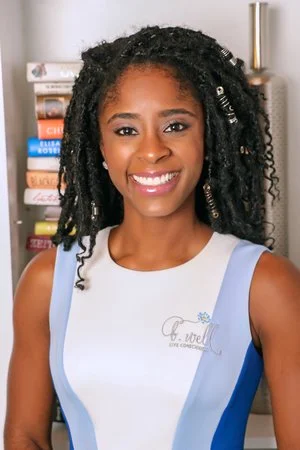
As a mother of three little girls, this week sits close to my heart in a very real way.
My youngest, Sofia, is now three and a half… and I can honestly say I’m just now beginning to feel like myself again.
That’s something we don’t talk about enough.
The postpartum period is not just a few weeks or even a few months—it can take years for a woman to return to herself after childbirth. I spent four and a half years breastfeeding nonstop—18 months with my twins, and then another two and a half years with Sofia.
Four and a half years of giving my body, my energy, my sleep, my everything.
And I would do it again.
But that doesn’t mean it didn’t cost me something. For the last few years, I’ve been extremely tired. Mama is just getting her groove back…
I strongly believe women deserve to have that reality seen, respected, and protected.
Because motherhood—especially in those early years—is one of the most vulnerable seasons of a woman’s life.
And yet, for Black women, it is also one of the most dangerous.
There’s a quote that stays with me:
“What police do to Black men, hospitals do to Black women.”
And I, for one, can attest to this reality.
My experience during OB-GYN visits, childbirth, and postpartum was one of the most vulnerable seasons of my life—yet it often felt like an attack on my motherhood, my safety, and my overall well-being. That harm didn’t come from just one place. It came from multiple fronts—doctors, nurses, and even uneducated bystanders who contributed to an environment where I did not feel seen, heard, or protected.
And the truth is—this isn’t just personal. It’s systemic.
Research shows that Black women in the United States are 2–3 times more likely to die from pregnancy-related causes than white women . Even more alarming, education and income do not protect us. In fact, studies show that college-educated Black women can experience pregnancy-related deaths at rates up to five times higher than their white counterparts .
Let that sit.
The very things that are supposed to protect us—education, access, resources—do not shield Black women from harm in healthcare settings.
This is not about individual choices.
This is about systemic inequity, bias, and a healthcare system that too often fails Black women at the exact moment we need care the most.
So when we talk about Black Maternal Health Week, we are not just raising awareness.
We are naming a reality.
We are honoring lived experiences.
And we are demanding change.
Because Black mothers deserve to feel safe.
Black mothers deserve to be heard.
Black mothers deserve to live.
At B. Well, I hold a deep sense of protection for Black women—especially in the seasons where they are pouring out the most. We deserve care that listens. Support that honors us. Systems that see our humanity.
And beyond the systems—we deserve community.
We deserve to be held, too.
So this week, I invite you to do two things:
Pause and honor yourself—your body, your journey, your sacrifices.
And if you know a mother in her postpartum season… check on her, support her, see her.
Because she is carrying more than most people realize.
With love and deep reverence,
Adrianne